The Hacking Communities Frameworks
Seven frameworks for building communities that last, from the Core Values to Closeness Circles, and which one to reach for at which stage.
Seven frameworks, one system. The Hacking Communities Frameworks are seven connected models for building communities that sustain themselves, developed by Laís de Oliveira in Hacking Communities: Cracking the Code to Vibrant Communities. They are not alternatives to one another. Each answers a different question — when, what you believe, what you design, what you build, what happens inside it, who is close, and how one person travels — and using the right one at the wrong moment is the most common reason community strategy fails.
Start with the Dandelion Lifecycle. It tells you where your community actually is, and therefore which of the other six is the work in front of you.
The seven frameworks
The Dandelion Lifecycle — when
A single dandelion flower produces up to two hundred seeds, each carrying the same core. The Dandelion Lifecycle maps how a community develops through six organic stages — Seed, Sprout, Bud, Flower, Seed Head, Flying — telling you where the whole organism stands and what it is capable of right now. It is the map the other six hang from.
Read the framework →

The Core Values of Community — what you believe
Three values separate a community from a crowd: authenticity, humility, and abundance — the AHA values. They are called core from the Latin cor, meaning both heart and seed, because every other value a community holds grows out of these three like roots. They also work as a diagnostic: each one missing produces its own distinct failure.
Read the framework →
Community Design: the 5 Ps — what you design
People, Purpose, Participation, Programming, Platform — the five decisions every community makes before it can function. Not a checklist but a formula: People and Purpose create Identity, Programming and Platform create Connectedness, and Identity + Connectedness = Growth, which shows up as Participation. If you can't see your 5 Ps clearly, your members can't either.

Interaction Design: Lighthouse, Port, City — what you build
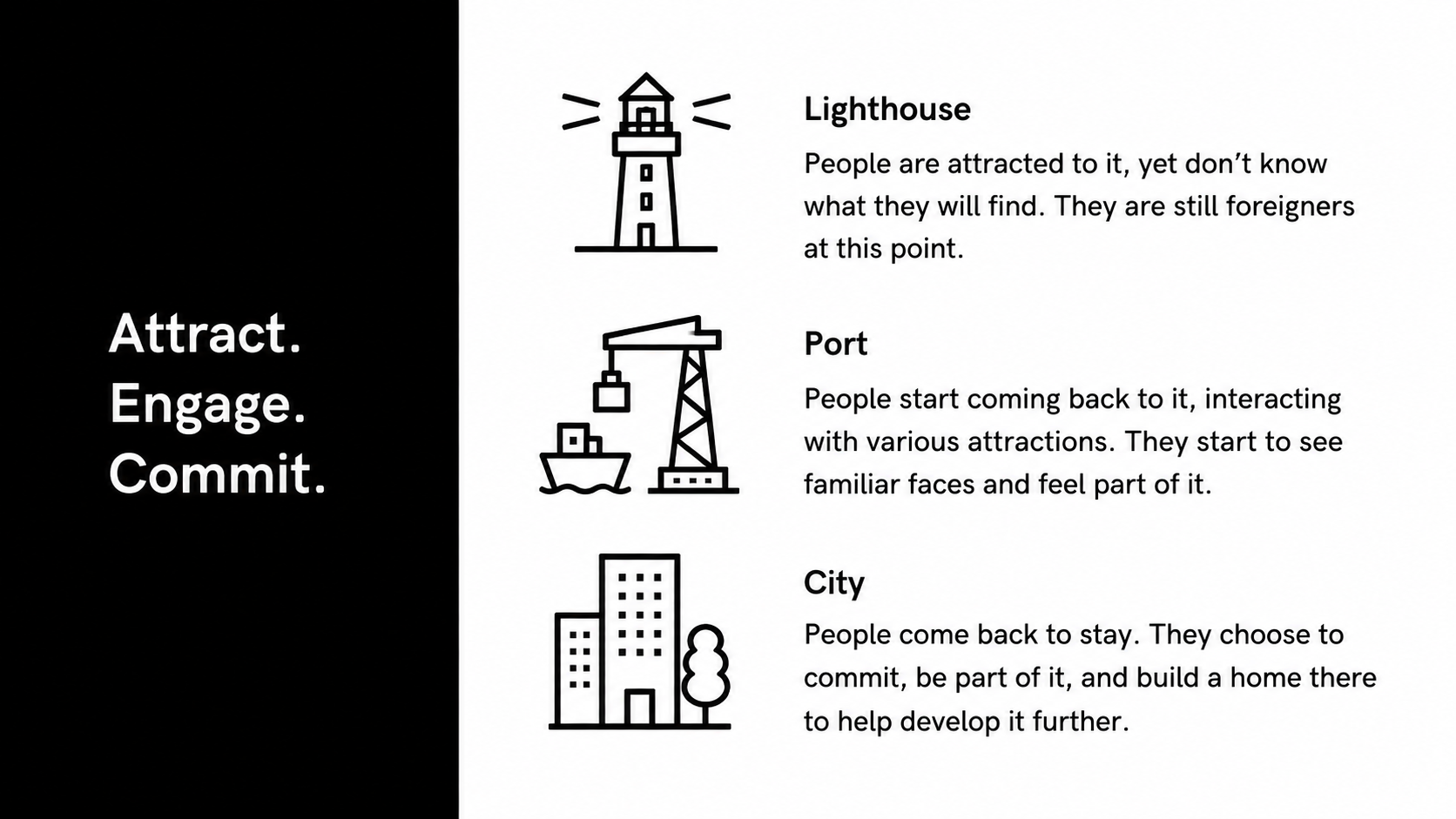
Every gathering should have a job. Interaction Design sorts everything you run by the depth of relationship it is built to create: the Lighthouse attracts and makes you a reference, the Port turns attention into familiarity through repetition, and the City is where people commit and start building. Most communities over-invest in the Lighthouse and never build a Port — which produces an audience, not a community.
Engineering Serendipity — what happens inside it
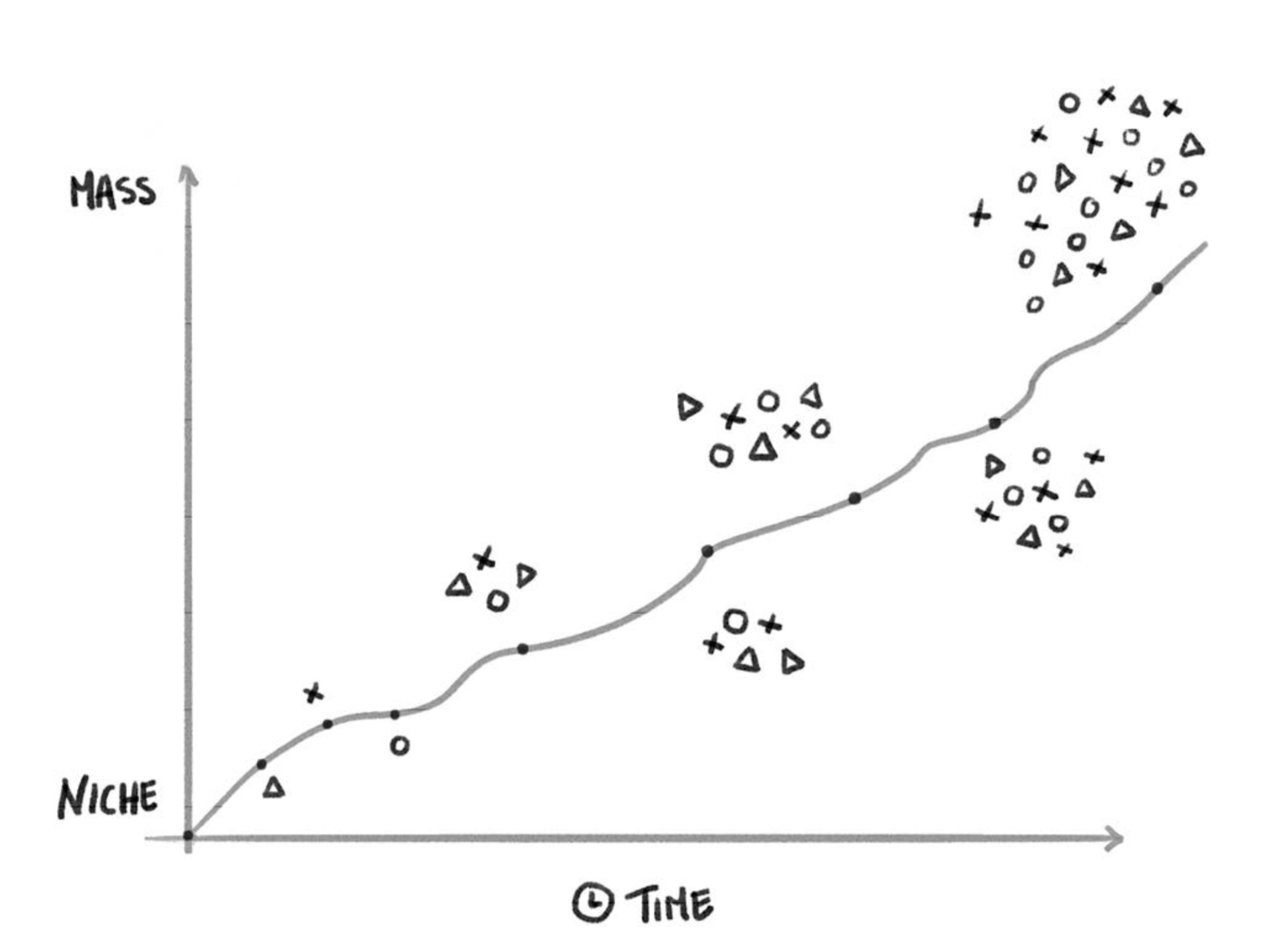
Collision theory, applied to people. You can't make two people become friends, but you can manage the three variables that make it likely: frequency (time), density (space and curation), and catalyst (trust and relevance). Manage what's within reach, and let go of the rest. Abundance + Curiosity = Serendipity.
Closeness Circles — who is ready to take action
Concentric layers of trust — Core, Inner Circle, Network, Crowd — each with its own cadence and depth of communication. From your side the variable is vulnerability; from the member's side it is commitment. It's the framework for deciding who hears what, and when — and for making sure the people who have given the most aren't spoken to like strangers.

The Community Success Journey — how people grow along with your community
Contribution is something you design for, not something you hope for. The Community Success Journey maps how a member travels from newcomer to top contributor: the Journey is the path, the Lifecycle is the clock, and beneath both sits a value ladder where each level rests on the one below. Every community has one threshold where a member stops consuming and starts participating — find it, and orient everything around making that crossing fast.
Where should you start?
Start with the Dandelion Lifecycle, because it tells you which of the others is actually your work right now. A community at Seed doesn't need a funnel; it needs a core. A community at Flying doesn't need more attraction; it needs visible layers and a path between them.
The usual mistake isn't picking a bad framework. It's picking a good one too early — running Flower-stage tactics on a Sprout-stage foundation, and concluding the community is the problem.
Which framework belongs to which stage?
Each stage of the Dandelion Lifecycle has frameworks built for the work it requires.
Seed and Sprout call for the Core Values and the 5 Ps — settle what you believe and who this is for before designing anything else.
Bud and Flower call for Interaction Design and Engineering Serendipity — bringing people together, and making the encounters produce something.
Seed Head and Flying call for Closeness Circles and the Community Success Journey — visible layers, and a visible path between them.
What's the difference between the Dandelion Lifecycle and the Community Success Journey?
The Dandelion Lifecycle describes the community. The Community Success Journey describes a member. They are easy to confuse — both have stages, both get called journeys — but they measure different things. One asks how developed this community is and what it can do now. The other asks where a particular person is and what they need next. A young community can have a deeply committed member; a mature one can be full of newcomers.
Small text at the bottom
The frameworks come from Hacking Communities: Cracking the Code to Vibrant Communities by Laís de Oliveira. Also published in Portuguese as Reinventando Comunidades.
Last updated: 19 August 2026
Integration Template: How the Community Success Journey Integrates with other frameworks: Interaction Design (Lighthouse, Port, and City) and Closeness Circles
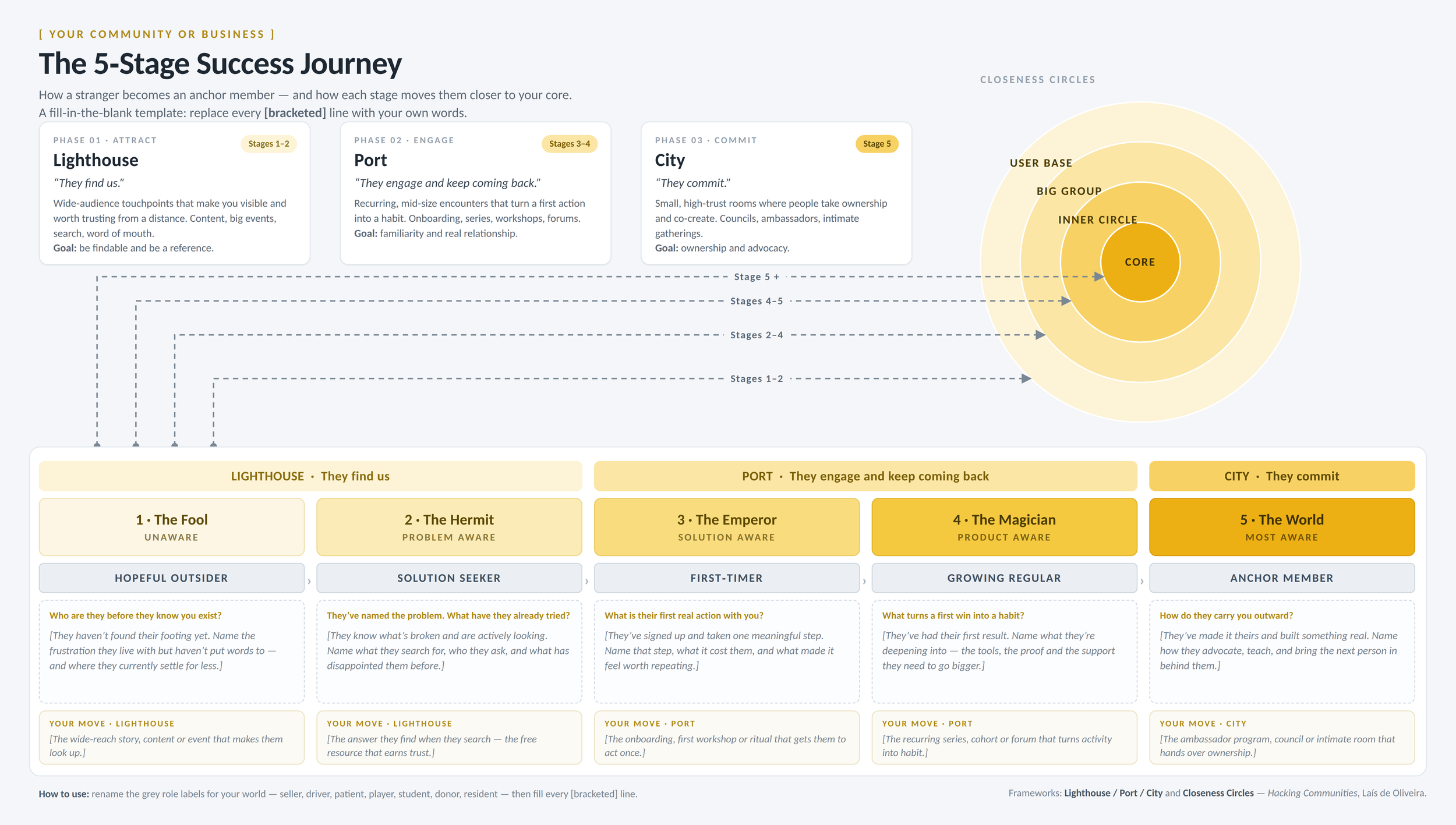
The 5-Stage Success Journey: how a stranger moves from Unaware to Most Aware across the Lighthouse, Port and City phases — and how each stage pulls them closer to your Core. Hacking Communities: Cracking the Code to Vibrant Communitiesby Laís de Oliveira.